Michigan State University is fortunate to have passionate educators who are committed to enhancing the experience of their students and who help to provide the best education possible.
The Graduate School is featuring some of these educators – graduate and postdoc educators – every month to share their unique stories and perspectives on what it means to be a dedicated educator, how they’ve overcome educational challenges, and the ways they have grown through their experiences.
For December 2025, we are featuring Farnaz Tajik, who is a doctoral student in Plant Biology. In her writeup, Farnaz shares how she adapted to a different educational system while navigating language barriers, cultural differences, and living independently for the first time in her life.
What does it mean to be an educator at a university? 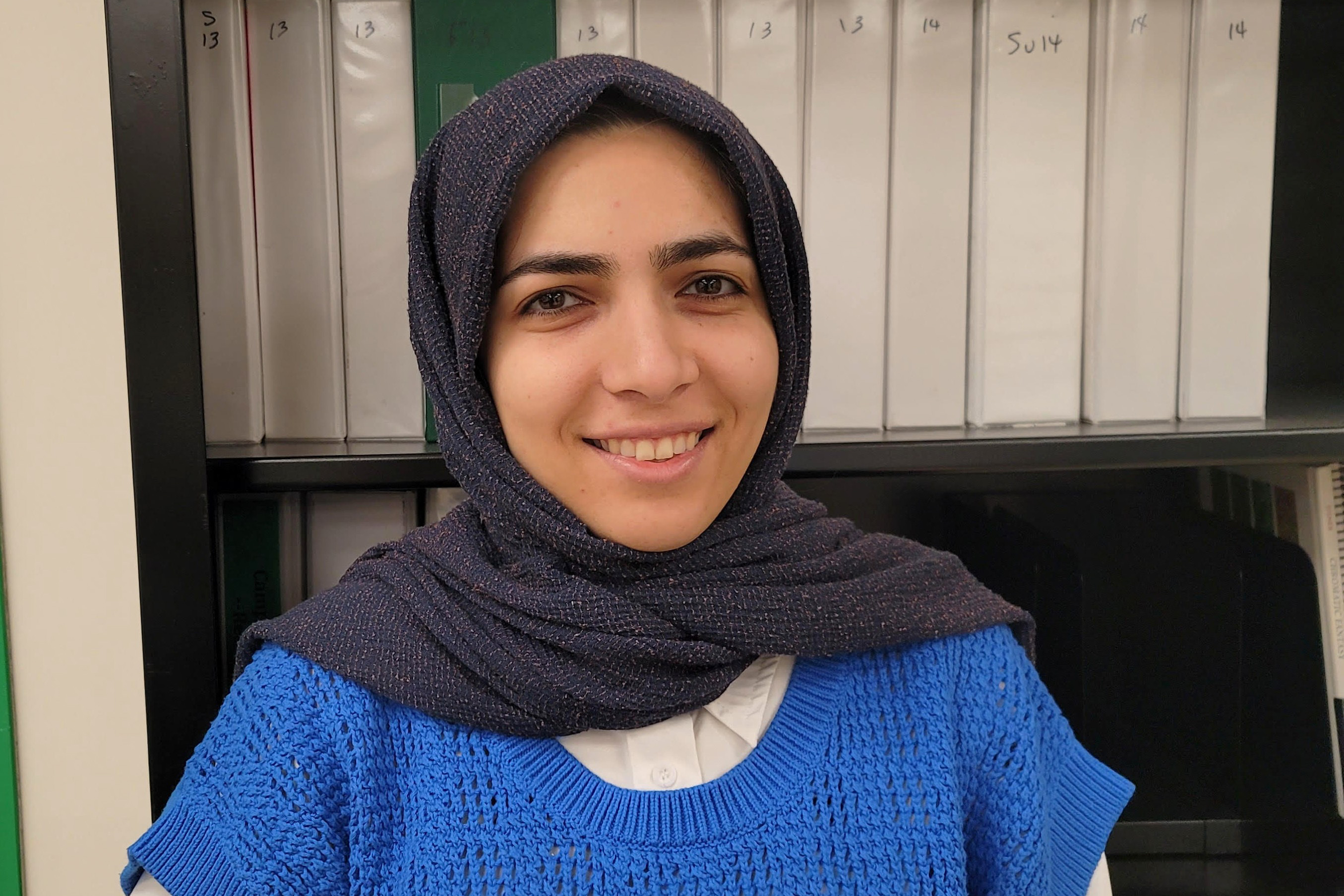
I am personally so glad and proud that I could experience teaching at the university and interact with students and learn more about academia here. I do think teaching at a university level can be somewhat different from K-12. Here, students tend to be more mature and may have different challenges and priorities in their life when compared to K-12 students.
Also, students attending a university typically have a greater workload, and as students come from different backgrounds, whether it be cultural or socio-economic, they try to adapt to a new environment and a new way of life while learning material that may shape their future careers.
Therefore, teaching methods and considerations that an instructor or graduate teaching assistant should be aware of can be vastly different from a K-12 instructor. I think having this experience is very beneficial for me to study the education systems comparatively and look at teaching and learning from a more comprehensive perspective.
Challenges you have experienced and how have you grown from these?
Coming to the U.S. and getting used to a different educational system was challenging for me in the beginning, in combination with other barriers such as language, difference in working culture and adapting to living independently for the first time in my life. But, as time passed, I adjusted to the situation and adapted to the system in a way that I could keep my identity while being respectful and flexible to the new environment I was in.
An open-minded approach to differences in educational systems and cultures, etc. has helped me overcome some of the initial obstacles and has been beneficial for me to manage different aspects of my life better.
Something that was so hard for me in the beginning was the idea that only I had these problems and that other international students were handling their situations better. However, now in my fourth year, I am seeing even some domestic students dealing with the same things!
What value do you see in teaching professional development?
I truly appreciate the training and service that the university - and in particular the Graduate School - provides for graduate and international students. I think these programs first give students adequate and helpful support and training and then introduce them to other resources.
They also provide an environment for students to grow their network and social interactions. As an example, through these connections I learned about one of the professors in another department and benefited from his help in my research.
I believe that participating in these training courses and working as a GTA can make the experience much easier and less stressful. Therefore, I recommend that incoming and new students participate in relevant trainings and apply the methods in their classes where applicable.
What is one piece of advice you would give other graduate educators?
I think managing time and paying attention to their mental health is very important. As an IN!SPIRES Wellness Ambassador, I would like to suggest they pay attention to rest and social time, and use university counseling services such as CAPS, which are free of charge. This ensures they have someone reliable to talk to and feel heard if/when they have any problems. And if they face any problems in the classroom, they should try to talk to someone who can give practical, professional advice about the working culture here to help reduce mental pressure.
I cannot recall anything that a student may need in their life as a graduate student that the university has not provided - from counseling sessions to statistical analysis guidance and writing services - I strongly recommend students to use these services, especially early in their programs when they might feel overwhelmed.
What do you enjoy in your free time?
I try to have a balance between work/study and my personal life, but it is not always doable. However, when I can, I try to read books or listen to audiobooks, cook and draw.
Meeting a lot of friends and keeping myself social is also a new part of my life and has been very helpful for improving my sense of belonging, understanding society better, and avoiding isolation.
What non-academic book are you currently reading/ or is a favorite?
I mostly read storybooks or novels, or what I tend to call teenage fantasy stories. The books I read are sometimes simple daily-life stories about women or groups of people by lesser-known authors; other times I choose well-known bestsellers by well-known writers. And for the ease of work and engaging myself in reading, my focus is reading in Persian (Farsi) rather than not reading at all.
If I want to be more specific, I can name some of the books I have read lately from contemporary writers such as Mahmoud Dowlatabadi ("Kelidar"), Khaled Hosseini ("A Thousand Splendid Suns"), Zoya Pirzad ("We'll Get Used to It"), etc.