Michigan State University is fortunate to have passionate educators who are committed to enhancing the experience of their students and who help to provide the best education possible.
The Graduate School is featuring some of these educators – graduate and postdoc educators – every month to share their unique stories and perspectives on what it means to be a dedicated educator, how they’ve overcome educational challenges, and the ways they have grown through their experiences.
For April 2026, we are featuring Sabrina Zarza, who is a dual-major doctoral candidate in Mathematics Education and Chicano/Latino Studies. In her writeup, Sabrina talks about the importance of honest communication about capacity, boundaries, and uncertainty.
What does it mean to be an educator at a university?
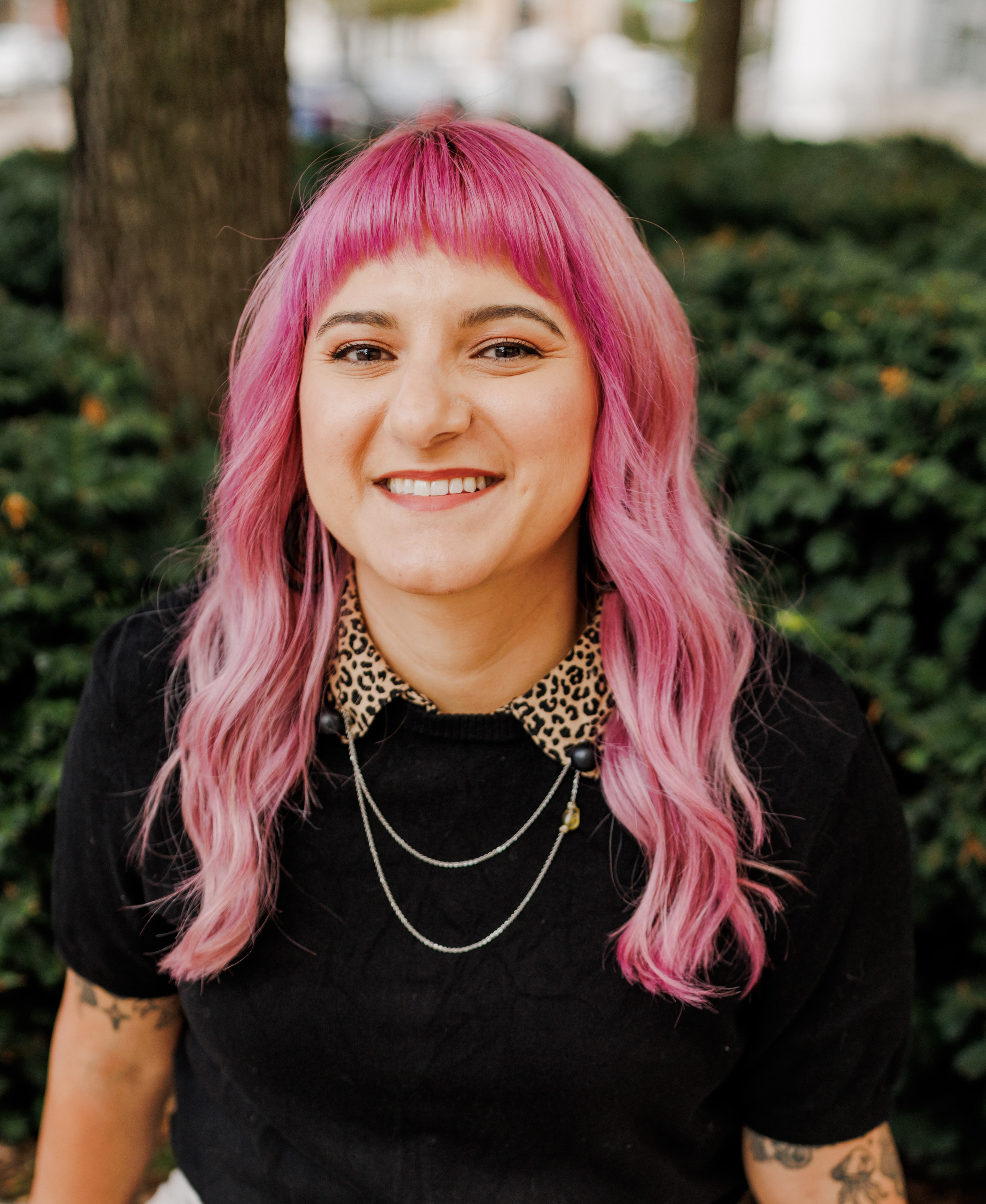
For me, being an educator at a university means genuine supporting and connecting with students. By this, I mean it is more than delivering content. It’s creating a space where students feel seen and are supported in their thriving on campus.
It means recognizing that the classroom is never neutral, especially in mathematics, where so many students have already received the message, implicitly or explicitly, that this subject is ‘meant to be hard’ or perhaps isn’t a subject that should feel welcoming for them.
Being a university educator means holding that history honestly while actively working to change it.
Challenges you have experienced and how have you grown from these?
One of the more persistent challenges has been navigating my dual role as both a student and an instructor.
There are real tensions in managing your own academic deadlines while showing up for students during office hours, extra study sessions, and the emails that flood in before exams.
What it has taught me is the importance of honest communication with students about capacity, and with myself about boundaries.
What value do you see in Teaching Professional Development?
Professional development has shaped my practice from both sides. As a participant, I completed the Interdisciplinary Inquiry and Teaching (IIT) Fellowship last year and am currently a fellow in the Scholarship of Undergraduate Teaching and Learning (SUTL) program, both of which have deepened how I think about translating knowledge into meaningful learning experiences.
I have also engaged in local teacher development around mathematics education and policy in Michigan. As a facilitator, I have led workshops on Chicana feminist methodologies for graduate and undergraduate students and have worked with the Math department’s Center for Instructional Mentoring where we facilitate sessions for first year math doctoral students focused on concepts and methods that will help them in the new roles as teaching assistants on campus.
What is one piece of advice you would give other graduate educators?
Let your students see that you are still learning too. The pressure to project certainty is real, especially in a course like mathematics where it is often assumed that there is one right way to do things (there isn’t, by the way).
Showing students that questioning, revising, and sitting with uncertainty are part of the process rather than signs of failure is one of the most honest and powerful things you can do inside the classroom.
What do you enjoy in your free time?
I play board games with my husband! We play the long strategic kind that reward patience and careful planning (at least that’s what I think) like Summoner Wars, Taverns of Tiefenthal, the two-player version of Seven Wonders.
We are both competitive, but I will fully admit I am the one who lingers longest on every turn. My husband has opinions about this. For me, that deliberation and strategy is half the fun. The other half is constantly trying to prevent our cats from knocking down all the game pieces or sitting right on the center of the board!
What non-academic book are you currently reading/ or is a favorite?
The last book I couldn't put down was “Yellow Face” by R.F. Kuang. Highly recommend it but be prepared to get frustrated!
I also just picked up “Weapons of Math Destruction” by Cathy O'Neil, which sits in an interesting gray zone between personal reading and my research. It keeps coming up in conversations about data, equity, and mathematics, and I finally decided it was time to read it myself.