Outstanding Faculty Mentor Award

Halvorsen, Anne-Lise

Professor Anne-Lise Halvorsen in the Department of Teacher Education exemplifies all of the foundational values of this award, namely a commitment to: respect and care; professionalism, ethics and integrity; and the professional and personal growth and independence of the student. 

She has advised 25 Curriculum, Instruction and Teacher Education (CITE) PhD students, served on 30 dissertation committees, and served as the CITE Program Director. Graduate students gave examples of how she goes above and beyond to ensure they receive the support and resources they need to succeed, even before they started at MSU. She seeks out opportunities for each student to learn and thrive in their personal and professional lives. It was noted that "She is always there to give a helping hand, asking us which of the three 'h's' we would prefer: a hug, to be heard, or to be helped." 

Prof. Halvorsen has helped bring together graduate students and faculty across the Midwest by organizing professional gatherings through the Midwest College and University Assembly of the National Council for the Social Studies that help students build important professional networks and provide feedback on their research projects.

Outstanding Early Career Faculty Mentor Award

Szczepanski, Caroline

Assistant Professor Caroline Szczepanksi in the Department of Chemical Engineering and Material Science exemplifies all of the foundational values of this award, namely a commitment to: respect and care; professionalism, ethics and integrity; and the professional and personal growth and independence of the student. 

She completes an expectations document with each student in her lab that outlines strategies for communication and success and works with them to develop a strategic plan each semester. These documents are reviewed and updated regularly. She regularly publishes with her students, graduate and undergraduate, as first or primary authors. Several of her students have been recognized for their research including an MSU Goldwater nominee and the 2024 Best Materials Science Graduate Student. 

Prof. Szczepanksi 's graduate students see her as a role model for their own mentoring styles, and two of them have won university awards from the Office of Undergraduate Research, the 2024 and 2025 Research Supervisor of the Year, for their mentorship of undergraduates. In 2024 she won the Excellence in Diversity - Emerging Accomplishments Award from the College of Engineering for her efforts to foster an inclusive environment in her lab and the broader community.

Outstanding Doctoral Student Mentor Award

Luttman, Andrea

Ms. Andrea Luttman is a PhD student in the Genetics and Genome Sciences program.  Her research project examined stress resilience in young pigs and required intensive sample and data collection that required the hiring and training of >20 undergraduates. Not only did Andrea independently train each student for her project in a thoughtful way, she also encouraged and supported them to conduct their own undergraduate research projects including presenting at research forums. 

She serves as the advisor for the MSU Horseman's Association and coaches the MSU Animal Science Academic Quadrathlon team. A group of undergrad and graduate students provided testimonials to how Andrea's mentoring has impacted their academic, professional and leadership development. Several students noted her dedication to helping everyone whether it was in research, teaching, career advice or personal challenges.

Outstanding Graduate Program Community Award

Integrative Biology

The Department of Integrative Biology (IBIO) has substantially transformed their graduate program over the last few years through a collaboration effort between the students, faculty, and departmental leadership. After receiving feedback from the graduate students about their key concerns, the program significantly revised their Graduate Student Handbook, formed a Graduate Student Organization (GSO), expanded travel funding to scientific meetings, and established 3 new departmental awards. 

The GSO established a peer-to-peer mentoring program, organized a grad student retreat, and documented procedures for mediating student-advisor relationships. The program has revised their comprehensive exam process, including having rubrics included in the new Handbook, that ensure fairness, transparency, and consistency. Several graduate students testified to the tremendous strides the program has made to support them in multiple ways: academically, professionally, and financially.

Political Science

The Political Science graduate program works to meet their students' educational and professional development needs in several ways. The Graduate Student Association (GSA) plays a core role within the department by serving on many departmental committees, including climate and access, strategic planning and the Graduate Committee. The department has recently created a new lounge space for the graduate students that includes a lending library with many of the first-year textbooks and reference materials. The program is committed to career and professional development. For example they recently turned a teaching professionalization workshop into a semester course. They have instituted peer mentoring in the form of "Methods Fellows" with experienced students helping the first-year students through their initial coursework. To foster networking opportunities and career placement after the pandemic the program hosted a student-alumni conference, that they hope to continue. 
Outstanding Faculty Mentor Award

Nejadhashemi, Amirpouyan

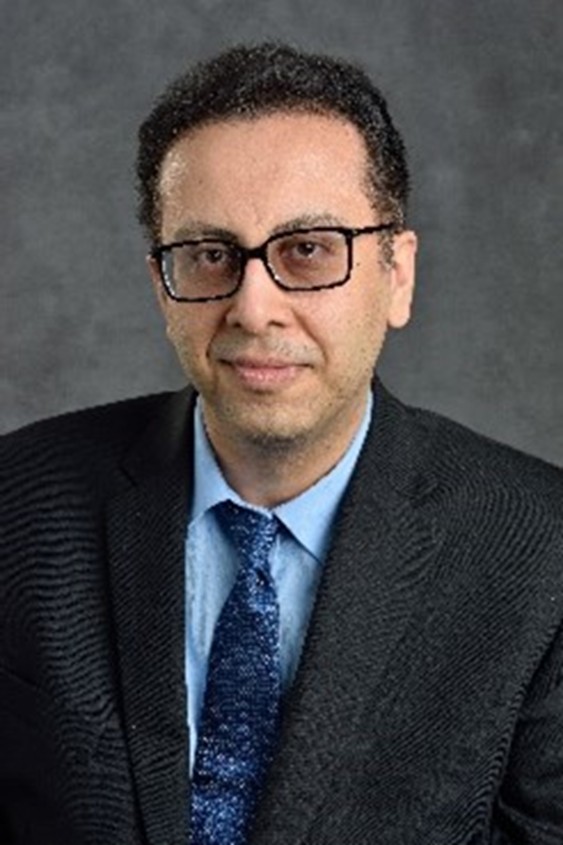
Amirpouyan Nejadhashemi in a black suit, blue shirt, and blue tie.

Professor Amirpouyan Nejadhashemi in the Departments of Biosystems and Agricultural Engineering and Plant, Soil and Microbial Sciences exemplifies all of the foundational values of this award, namely a commitment to: respect and care; professionalism, ethics and integrity; and the professional and personal growth and independence of the student. Dr. Nejadhashemi has mentored 30 graduate students to successful completion of their degrees and is currently mentoring 5 Ph.D. students. He's also served on over 26 graduate student committees and mentored 18 postdocs and visiting scholars. 

A letter co-authored by 34 former and current students and postdocs documents Dr. Nejadhashemi's deep caring, passion and long-term commitment to his mentees broad professional success and personal wellness. They said "He mentors a very diverse group of students and integrates every one of us so that we feel supported, motivated, willing and excited to work as a team." 

His commitment to excellence extends beyond his own team. As the Biosystems Engineering Graduate Director he led changes in the program requirements and management that focused on tracking and promoting student progress and success. Dr. Nejadhashemi's mentoring skills have been noticed by his department where he serves as a role model and mentor for faculty colleagues, especially on topics related to graduate student success and mentoring.  

Outstanding Faculty Mentor Award

Burgess, Terrance

Assistant Professor Terrance Burgess in the Department of Teacher Education exemplifies all of the foundational values of this award, namely a commitment to: respect and care; professionalism, ethics and integrity; and the professional and personal growth and independence of the student. Several doctoral students provided numerous examples of how Prof. Burgess has met each of the foundational values. 

Two graduate student nominators stated, "Dr. Burgess seamlessly integrates his knowledge of his students with his knowledge of the field, allowing him to simultaneously facilitate meaningful connections that prioritize both our wellbeing and opportunities for professional growth and development." Students mentored by Dr. Burgess shared how he approaches mentoring as a reciprocal relationship, positioning himself as learning with and from his students, and stated they strive to be like him. 

A senior professor stated, "He makes hidden strategies explicit, provides a model of active engagement in justice-oriented community-based research, and demonstrates what it looks like to be an exceptionally professional colleague advancing students' growth".

Outstanding Doctoral Student Mentor Award

Genoese, Francesca

Ms. Francesca Genoese is a PhD student in the Kinesiology program where she has formally mentored 11 masters students, a medical student, 6 undergraduate research assistants and 10 undergraduate teaching assistants. A group of these students nominated Francesca and supplied multiple examples of how "her leadership, open-communication, inclusiveness, and support of student wellness is above and beyond those mentorship values outlined by the university" in MSU's Mentoring Guidelines. 

In addition to the formal mentoring she's done within MSU's Athletic Injury and Rehabilitation lab, she also informally mentors a wide-variety of students within the Kinesiology department including clinically-orientated athletic training students. It was noted that "What is amazing about Francesca is that she can understand the different needs between her various types of students and provide them with the exact type of mentoring they need for their specific career stage." 

In addition to her effectiveness in mentoring individuals she has also participated in several activities with the College of Education Early Success Scholars program as well as served as the Graduate Student Liaison for the Kinesiology Undergraduate Organization and served on the Exercise is Medicine on Campus Graduate Student panel.

Outstanding Graduate Program Community Award

Ecology, Evolution and Behavior

The Ecology, Evolution and Behavior (EEB) program is a dual-degree (PhD) and specialization (MS) program that accepts students from over 15 departments ranging from Computer Science to Plant Biology to Psychology. The EEB program is interdisciplinary in nature and as one PhD candidate stated "EEB has been integral in my graduate career by providing a diverse and welcoming community of peers and mentors, professional development opportunities, and the financial resources to help me succeed during my time at MSU". 

The EEB program proactively works to meet their students' educational and professional development needs in several ways. For example, the EEB handbook comprehensively explains what is required for the EEB degree and clearly states this is in addition to a student's home department requirements. They have an active Graduate Group that organizes a bi-weekly Student Colloquia series as well as hosts social events. The EEB DEI committee hosts the Envision EEB program which brings college students from historically excluded backgrounds to campus for 3-days to learn about graduate school and network with potential advisors. 

There is an annual Research Symposium led by the EEB Presidential Postdoctoral Scholars where EEB members can present their research to the community. The EEB program also provides financial resources to graduate students in various ways, including fellowships such as the Professional Horizons Grant that supports professional development activities.

Outstanding Faculty Mentor Award

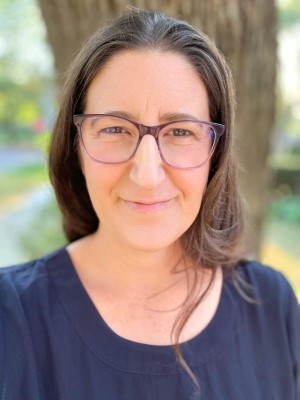
Teena Gerhardt

Teena Gerhardt wearing a blue shirt and standing in front of a tree.

Professor Teena Gerhardt from the Department of Mathematics exemplifies all of the foundational values of this award, namely a commitment to: respect and care; professionalism, ethics and integrity; and the professional and personal growth and independence of the student. Current and former graduate students described how her excellence in mentoring extends across her teaching, her research renown and her care and compassion. A student commented that Dr. Gerhardt's mentorship "is grounded in genuine care for the holistic wellbeing of students; her concern, advice, and support extend far beyond our mathematical progress." 

In addition to mentoring her own PhD students, Prof. Gerhardt co-organizes a graduate mentoring program for 29 graduate students across 9 universities that is funded through an NSF Focused Research Grant. She is a mentor for the Math Alliance, a national organization aimed at increasing the number of PhDs in math among traditionally underrepresented groups. She is also co-PI on two federally funded training programs at MSU, an NSF Research Training Grant and a summer Undergraduate Research Experience program. Through these programs she provides opportunities for graduate students to explore being mentors to undergraduates. "Prof. Gerhardt goes out of her way to support her Ph.D. students' overall career goals, growth, aspirations and well-being."

Outstanding Early Career Faculty Mentor Award

stef shuster

Stef Schuster

Associate Professor stef shuster in Lyman Briggs College and the Department of Sociology: 

While Dr. shuster's primary appointment is in Lyman Briggs, which is an undergraduate residential college, they have worked with graduate students in the Department of Sociology as well as more broadly through their work with the Center for Gender in Global Context (GenCen). Many students, both current and former, from across several different programs supplied testimonials demonstrating how stef exemplifies MSUs Foundational Values for graduate student and faculty mentoring relationships. 

The statements demonstrated how Dr. shuster helped them obtain jobs, publish their research, make informed career decisions, and led by example on how to be a good mentor. A faculty member that co-chaired a dissertation committee with stef saw their mentoring style firsthand stated, "stef listens, reflects, and meets people where they are without judgement and goes above and beyond to promote their ideas and ensure their success".

Outstanding Doctoral Student Mentor Award

Tyburski, Brady

Mr. Brady Tyburski is a PhD student in the Program in Mathematics Education (PRIME). In Fall 2020 Brady founded a weekly seminar called PRIME Time. The goal was to create a space that provided academic mentorship and socio-emotional support for graduate students by graduate students in the PRIME program. Brady’s fellow students provided testimonials on how impactful this seminar has been for them, especially during the pandemic. 

Since 2021 Mr. Tyburski has been coordinating the Mathematics Learning Research Group (MLRG) seminar that is a biweekly professional development seminar for mathematics education graduate students across various doctoral programs. In addition to organizing seminars from outside experts on topics such as how a journal article review process works, Brady has been instrumental in getting graduate students to present their own research projects while facilitating feedback from the group. 

He has held leadership roles in the PRIME Graduate Student organization and was elected to serve on the Council of Graduate Students. Several students commented on how Brady is always willing to give of his time to mentor them, especially in ways that help them achieve their own goals.  The student nominators wrote “We truly believe that Brady has helped our mathematics education community connect with one another, learn from each other, and grow together.” 

Outstanding Faculty Mentor Award

Ann Marie Ryan 

Ann Ryan seated and wearing a white patterned shirt.

Outstanding Faculty Mentor Award for a senior faculty member goes to Dr. Ann Ryan, professor in Psychology. Dr. Ryan has a sustained history of more than 25 years of excellence and leadership in improving graduate education and mentoring her own graduate students and those throughout the Michigan State University community. Because of these efforts, Dr. Ryan has been recognized over the years for her mentoring and teaching including being the recipient of the 2018 Raymond Fowler Award from the American Psychological Association which is given to one of more than 100,000 members for their outstanding contributions to the professional development of students.  

One of her students said that although Dr. Ryan is a world class scholar, she "talks to her students as if she were learning from us." Her past and current mentees feel “a profound sense of kinship": when they meet, they "often talk about being raised with her ideals of conducting rigorous scholarship, leading with integrity and ethics, and championing values of excellence and inclusion."  As emphasized in Dr. Ryan’s nomination package, perhaps one of her most notable achievements in graduate student mentoring and professional development has been her demonstrated commitment to inclusive mentoring, an area in which she has also been recognized through national research awards.  

As a result of these efforts, the diverse group of graduate students she has mentored have gone on to be successful professionals in numerous career trajectories, including leadership at top corporations and leading HR consulting organizations. Dr Ryan’s contributions to shaping her field have also been recognized by receipt of the Michael R. Losey Excellence in Research Award (2021) from the Society for Human Resource management, which honors lifetime achievement in human resource research, recognizing significant past and ongoing research contributions that impact the HR management field.

Outstanding Faculty Mentor Award

Maria Lopez

Maria Lopez  standing outside and wearing a rainbow shirt.Outstanding Faculty Mentor Award for a junior faculty member goes to Dr. Maria Lopez, professor in Community Sustainability. Fourteen current and former graduate students wrote the letter of nomination for Dr. Lopez, explaining the ways in which she “has expanded our view of the world and has further confirmed our desire to become researchers and development practitioners who are looking for sustainability solutions to local communities’ challenges.” They describe how she helps them set goals at the beginning of each semester and creates a supportive environment in which the students operate as a collaborative group to each one meets their goals. Through this "intentionally created . . . multi-generational cohort of students," Dr. Lopez helps to model key professional skills (critical thinking, peer-review, giving and receiving supportive feedback) and modes of co-mentoring.  
Many of her students report that while in graduate school they authored a manuscript as first author with her support and have been co-authors on publications with her.  She has worked with her students on writing successful grant proposals to fund their multidisciplinary research projects.  Dr. Lopez has helped fund her students to attend career building workshops; she connects them with her own nationally networked research projects so that they can build their professional connections outside their immediate field to further their own multidisciplinary research. With few opportunities within the graduate program to teach, Dr. Lopez has worked to find teaching experiences for her students and to encourage their participation in intensive university-wide programs (e.g., FAST) to develop their teaching expertise. 

When her students are doing field research, she works with them in advance to link them with a knowledgeable local partner, ensures they have the tools and resources they need before they go, and checks in regularly while they are in the field to ensure their wellbeing and to help them through research issues: “she encourages us and trusts in our research abilities."  Dr. Lopez mentors many international students and helps them navigate MSU processes and procedures.  As current and former students summed it up, they know when they become her mentees that "Dr. Lopez is a mentor for life."

Outstanding Doctoral Student Mentor Award

Erica Dalzell is in the School of Criminal Justice. She received this award for her work supporting and mentoring undergraduates, fellow graduate students, community partners, and faculty engaged in work around the Juvenile Risk Assessment Team, a data management partnership between Michigan State University and the Juvenile Division of the Ingham County 30th Circuit Court.  Ms. Dalzell has served her peers as a leader in the School of Criminal Justice Graduate Student Association, where she advocated for improvements to the professional development courses and support for graduate student quality of life. She was also elected to serve the School of Criminal Justice Committee on Equity, Inclusion, and Justice and the search committee for a new Director of the school. 

Her mentoring legacy is, perhaps, most extraordinary when you examine the impact she has had on undergraduate students. Many of the undergraduates who join the JRAT community may expect to do only data entry, but instead are mentored by Ms. Dalzell through all facets of a research project: identifying a testable hypothesis, designing appropriate research methodologies, applying for funding to support the work, writing up results for publication and dissemination, and translating research to practice. These students then present their work at national conferences, the University Undergraduate Research and Arts Forum (UURAF), and for community research partners in the Ingham County 30th Circuit Court Family Division. 

Ms. Dalzell mentors her undergraduate team in professional norms and preparation from public speaking to interviewing so they can each find the professional path that best fits their goals. Of Erica’s 17 mentees, 15 have earned grant funding, and most have gone on to graduate programs or applied juvenile justice work. Under her mentorship, all these students have made important contributions to the juvenile justice literature and a tangible difference in the lives on system-involved youth in Ingham County.  

Outstanding Doctoral Student Mentor Award

Azam Ali Sher

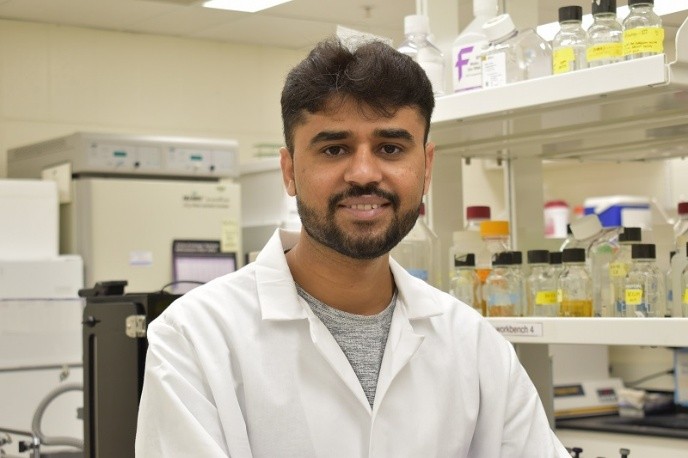
Azam seated in a laboratory and wearing a white lab coat.

Azam Ali Sher, a trained veterinarian originally from Pakistan, first came to MSU as a Fulbright Scholar and then returned to campus to pursue a master’s degree in Epidemiology. He is now working toward a Ph.D. in Comparative Medicine and Integrative Biology (CMIB) and Environmental Toxicology (EITS). This diverse scholarly background and his international perspective make him an effective mentor to undergraduates who come from a variety of backgrounds and scholarly traditions including MSU undergraduate researchers, participants in the Summer Research Opportunity Program (SROP), and his peers in graduate school. He works with these students to train them in different laboratory techniques, but also in research study design, speaking and presentation skills, and exploring career opportunities. 

His colleagues have gone on to present and win awards at the University Undergraduate Research and Arts Forum (UURAF), Mid-SURE, and the professional conferences in microbiology and infectious diseases. His nominators highlighted what makes him such a valuable mentor: an infectious passion for science and inquiry, a soul of service and interpersonal connection to help people find a path for their goals, and valuable teaching skills that help build confidence in those with whom he works. 

He has been continuously praised for his excellent communication skills that help his students and mentees feel included, supported, and confident. Dr. Sher has demonstrated support for their scientific progress and research creativity. Concerned about his students' physical and mental health and academic success, he also supports students with insightful career advice. Several undergraduate researchers wrote in support of him earning this award, highlighting his integral role in helping them identify great graduate programs that align with their goals and helping them build a foundation for success.  

Outstanding Graduate Program Community Award

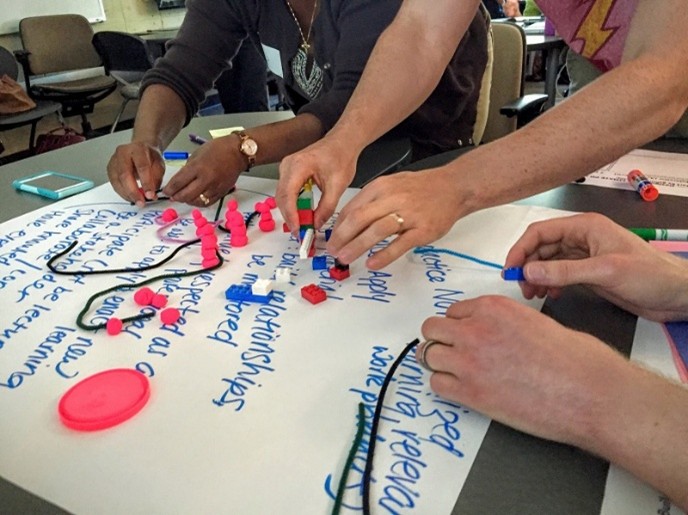
A posterboard with writing and pink playdough is being worked on by a series of hands.

The Master of Arts Educational Technology Program has been selected as the recipient of the 2022 Graduate School Outstanding Graduate Program Community Award. The program has outlined core principles (e.g., providing support from application to beyond graduation, valuing diversity of resources, perspectives, and communities, and promoting growth as curious learners and transformational leaders) that clearly align with MSU’s Foundational Values for Graduate Student and Faculty Mentoring Relationships. They also align with MSU’s values of collaboration, equity, excellence, integrity, and respect. 

The program has thoughtfully and intentionally designed both processes and interactions to center student success and to empower students to meet their individual career and professional development needs.  Testimonials from current students detail the various ways in which the program provides professional development opportunities that are attentive not just to individual students but to the local communities in which they are working: in the words of one student, "From the moment I began my graduate journey, I could sense I was stepping into something larger than a degree program." 

An alum of the program confirmed that experience, talking about the educational support she continues to receive from instructors in the program, even as she has transitioned into several different professional settings. Another alum, in describing the graduate community leadership in the program, observed that "it looks and feels" like an "integrated in a positive working culture” that is built around “ardent dedication to the values of open communication, integrity, and personal and professional growth.” 

All of the current and former student testimonials demonstrate that the program enacts its stated values, and they attribute both their professional success and their personal growth and development to their time in MAET. 

Outstanding Faculty Mentor Award

Dr. Nathan Moore

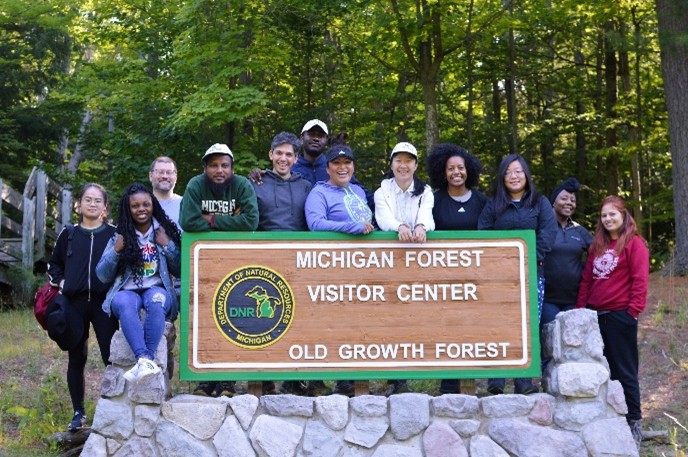
Nathan Moore amongst a group of people, standing behind a sign that reads, "Michigan Forest Visitor Center, Old Growth Forest."

The Outstanding Faculty Mentor Award for a senior faculty member goes to Dr. Nathan Moore, Associate Professor of Geography, Environmental, and Spacial Sciences. With a clear acknowledgement of the strength of this year’s nominees, the members of the committee independently ranked professor Dr. Nathan Moore’s at the top of this exceptional group. Dr. Moore’s. nomination was put forward by a large group of current and former graduate students, who offered testimonials illustrating his strong support for them across many different situations and issues. 

There is evidence of effectiveness, compassion and empathy in Moore’s mentoring engagements and the testimonials reveal the presence of an extraordinary and universal high level of trust from the students. His advisees speak to his commitment to their professional and personal development:  his “defining trait is fearless encouragement” and he “cares about the whole student as an intellectual . . . and as a person.”  In his time as graduate program director, the students affirmed that “he has a history of leading by example and exemplifying how to live the foundational values” set out in the MSU Guidelines for Graduate Student Mentoring. 

Dr. Moore’s record shows a strong commitment to diversity across multiple dimensions; he has been a positive and important influence on many students during the challenges of the pandemic and national social unrest.  As one student put it, “unbeknownst to him, Dr. Moore has been responsible for retaining a considerable number of students within the program through his continuing support and encouragement.” His leadership throughout the last year has been critical; in the words of his chair, “Nathan has been a rock for our students during this unsettling time.”  

Outstanding Faculty Mentor Award

Ashley Shade

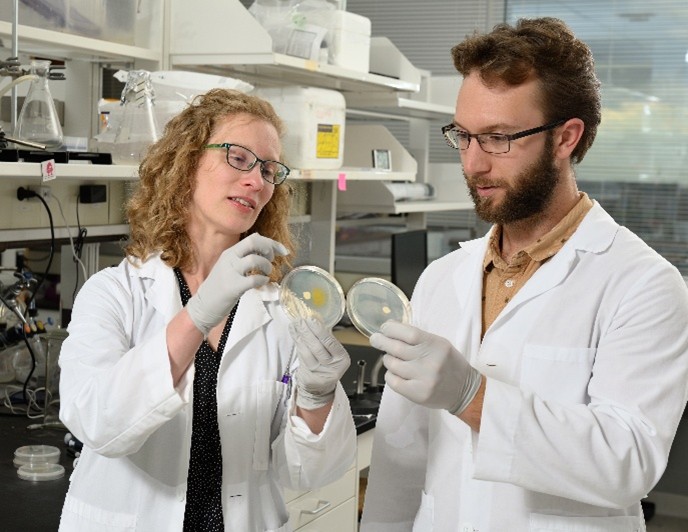
Ashley Shade working with a colleague in a laboratory.

The Outstanding Faculty Mentor Award for a junior faculty member goes to Dr. Ashley Shade, an assistant professor in Microbiology and Molecular Genetics. In their collective nomination letter, students detailed the ways that Dr. Shade has used her cross-disciplinary affiliations (faculty member in both MMSG and PSMS, and involvement in the Great Lakes Bioenergy Research Center, the Plant Resilience Institute, and the EEBB program) to expand her their networks and collaborations across fields.  She encourages her students to pursue novel research projects that go beyond her lab’s focus, helping them to develop as independent researchers.  She supports her students in their different career trajectories and encourages them to balance their research time with professional development training; as her students put it, “she whole-heartedly supports the interests of her mentees in whatever career path they choose to pursue.”  

In her annual performance reviews with her students, Dr. Shade solicits their feedback on her own effectiveness as a mentor and asks them to provide suggestions for improving the lab community for everyone.  This reflectiveness about mentoring extends beyond her own lab: she is committed to helping graduate students and postdocs become effective mentors for undergraduates, offering a summer “Entering Mentoring” workshop for her department. Her nomination letters attest both to Dr. Shade’s own strengths as a teacher and to her effective mentoring of graduate students in their teaching; she has mentored teaching-as-research projects for students involved in the FAST and Certification in College Teaching programs.  

Dr. Shade has been recognized for her leadership in mentoring by her departmental colleagues: she received the inaugural MMG Faculty Mentoring Award. Her exceptional work as a mentor across multiple dimensions (research, teaching, mentoring, career development) and evident care for her students would be noteworthy on their own, but she has also done this while being nationally recognized for her research excellence both by an NSF Early CAREER Award and selection as an Ecological Society for American Early Career Fellow.

Outstanding Doctoral Student Mentor Award

Jennifer Watts

Jennifer Watts seated and wearing a black shirt and pink suit coat.

The Outstanding Doctoral Student Mentor Award goes to Jennifer Watts in Molecular, Cellular, and Integrative Physiology. Jenn is a valuable colleague and leader to students, peers, faculty and others, and her contributions are wide and deep:  her many contributions to her various communities demonstrate her stated commitment to being the kind of mentor that she wishes she had encountered earlier in her career. 

As an African American woman in STEM, Jenn has a stated goal of creating a sense of belonging and support and being a leader in this work. To that end, she has served as a leader and mentor to other students she meets in the AGEP community, to the students she serves in the classroom as a TA, to the students and peers she works alongside in the lab. 

Her impact is local and international, ranging from MSU’s Undergraduate Mentoring Committee and Girls Math and Science Day to scholarly and research contributions in high-impact journals. With these examples, Jenn demonstrates how to model STEM success in scholarship, teaching, service and mentorship. We are honored to celebrate this impact. 

Outstanding Graduate Program Community Award

Human Development and Family Studies

A white Spartan helmet and text that reads, "Human Development & Family Studies."

The Outstanding Graduate Program Community Award goes to Human Development and Family Studies. The HDFS program has implemented a comprehensive approach to mentoring implemented by the HDFS program. This approach includes a perceptive and proactive interview process during recruitment, an effective orientation that includes mechanisms for peer mentoring and career planning, and a year-by-year process to nurture and sustain the professional and intellectual development of graduate students. 

In addition to these departmental efforts, the student nominators described the strong emphasis on student-initiated, student-led activities that receive advisory and monetary support from the program. Although this award recognizes several years of sustained mentoring initiatives, HDFS students also called out the special efforts they have seen during the COVID-19 crisis, with careful listening and quick action so that “students have continued to thrive despite the stressors of social distancing and rapid policy changes” and they have felt “supported and connected with the department during this time of uncertainty."

Outstanding Faculty Mentor Award

Stephanie Watts

The Outstanding Faculty Mentor Award for a senior faculty member goes to Dr. Stephanie Watts, Professor of Pharmacology and Toxicology. In addition to her distinguished research career, she has demonstrated a sustained commitment to the growth and development not only of her students, but of students across MSU’s campus (in her many years of leading the RCR Workshops) and across the country in her field. 

Dr. Watts is an exceptional scholar and teacher who exhibits all of the foundational values of mentoring when working with her students: listening, nurturing, empowering, and supporting her students, creating a culture of shared responsibility and respect in her lab while providing the individual attention needed by all students. The passion and heart-felt sentiments from current and former students in their nomination letter attested to the lasting impact of her efforts. 

What made Dr. Watts stand out among the other nominees was her ability to mentor and impact students far beyond her lab as demonstrated by her leadership of MSU’s NIH Broaden Experiences in Scientific Training (BEST) program grant where she has provided enhanced professional development and training experiences to hundreds of doctoral students at MSU. Going even further from home, Dr. Watts spearheaded the creation of the Trainee Advocacy Committee of the American Heart Association Council for High Blood Pressure Research (now the Council on Hypertension), one reason why the American Heart Association honored Dr. Watts by creating the Stephanie Watts Career Development Award in 2019.

Outstanding Faculty Mentor Award

Sarah Evans

Sarah Evans smiling while wearing a blue sweater.

The Outstanding Faculty Mentor Award for a junior faculty member goes to Dr. Sarah Evans, an assistant professor in the Kellogg Biological Station and the Department of Integrative Biology. Both the faculty and student nomination letters clearly conveyed Dr. Evans’ impressive commitment to mentoring and her students’ development and well-being highlighted by her openness in asking her students to provide annual feedback on what she is doing well and how she can improve as a mentor. 

What made Dr. Evans stand out was her ability to have an impact far beyond her lab. The faculty nomination letter highlighted that as a junior faculty member, she has already achieved the status of a leader, particularly in mentoring, whom other faculty look up to and learn from. Dr. Evans helped found the Culture and Inclusion Committee at KBS well before the recent Diversity, Equity and Inclusion initiatives on campus; she provides leadership by raising challenging topics, asking hard and sometimes uncomfortable questions, and proposing paths forward that engage and strengthen the community.

Outstanding Doctoral Student Mentor Award

Patricia Jaimes

Patricia Jaimes standing in front of a wall while wearing a pink t shirt.

The Outstanding Doctoral Student Mentor Award goes to Patricia Jaimes in Earth and Environmental Sciences. Her advisor summed up the range and impact of her efforts by saying: “I cannot stress enough how much of a mentor Patricia has been to high school students, undergraduates, peer graduate students, and even faculty. Patricia is certainly a mentor to me and my department where she is an expert—particularly around issues of equity and inclusion.” 

Ms. Jaimes built mentoring into every aspect of her activity as a graduate student, including research, teaching and outreach. She has sought out opportunities for developing her mentoring skills and advancing others, including in the Bailey Program, as a writing instructor for the SROP program, and as a Graduate School Writing in the Disciplines facilitator in the Earth and Environmental Sciences program. She has supervised student interns in the field with the U.S. Forest Service and been a research and career mentor for undergraduates and graduate students in the Geocognition Research Lab. 

The detailed comments from students about the impact she has had on their successful transition to graduate school, on their ability to navigate academic systems, on their individual research successes, and on their future careers choices show not only her high standards and expectations as a mentor, but the individual care and respect she displays for her mentees. 

As one of her SROP mentees put it, “it is one thing to act as a mentor and deliver the advice that is expected of being that role. It is a whole different level of mentorship when a mentor adapts to a student’s fortes and seeks to tap into their individual, hidden reservoirs of knowledge.” Her work with students in Upward Bound, SACNAS, AGEP, SROP, and your leadership in her department and elsewhere, have advanced work toward equity, inclusion and student success on MSU’s campus. 

Outstanding Graduate Program Community Award 

Program in Mathematics Education (PRIME) 

The selection committee was impressed by the variety of mechanisms that the program uses to deliver excellent mentoring and professional development opportunities to graduate students. The Transitions from Grad School (or “Homeroom”) workshops focusing on the socio-emotional aspects of becoming a faculty member demonstrate the extent to which the program thinks proactively and intentionally about the whole experience of the students.  

The Co-Integrate Mathematics Seminar Series is an outstanding example of how a typical career activity can be reenvisioned as a community building activity, where the community is conceived of broadly to include faculty, students, and K-12 teachers/administrators.  The student nominating letter—written by a group that includes students from different current cohorts as well as alumni who are now faculty elsewhere—details the thoughtful, multi-stage mentoring program that includes faculty and peer mentors in career and research mentoring: it provides younger scholars an opportunity to learn from more advanced students and “provides advanced graduate students experience in mentoring others on their research.”

Outstanding Faculty Mentor Award

Ryan Black

The Graduate School Outstanding Faculty Mentor Award for Senior Faculty Dr. Ryan Black in Political Science: Here is a summary of the selection committee’s assessment of his accomplishments:  Dr. Black is a first-rate scholar and teacher and is wholeheartedly committed to mentoring doctoral students, as highlighted by the candid and wide-ranging letter from several of his Ph.D. students.  

He works closely with his students, co-publishing with them generously and adapting to their needs for professional development as individual learners and future scholars as they move through graduate school-working with them on syllabi development, conducting mock interviews, and grant writing.  Dr. Black seems to make sure that his students are prepared to embark on the job market when necessary.  The success of his mentoring is evident based on the excellent placement rate of his former students.  

Outstanding Faculty Mentor Award for Early Career Faculty

Maribel Santiago

The Graduate School Outstanding Faculty Mentor Award for Early Career Faculty goes to Dr. Maribel Santiago in Teacher Education. The selection committee communicated the following in making their selection:  In addition to mentoring individual doctoral students, Dr. Santiago also engages in group mentoring programs (e.g., through establishing the History TALLER research collective and other workshops and programs).  

The letter from graduate students and recent Ph.D. graduates (15 people in total!) was heartfelt, compelling, and detailed numerous examples of how she provides effective professional development seminars and opens up research apprenticeships.  She actively mentors a diverse group of graduate students and mentors all students about sensitive issues pertaining to race, diversity and inclusion.  This is a challenging task that by all accounts she  engages in with great poise.  She seems to go "above-and-beyond the call of duty" in her commitment to mentoring.

Outstanding Doctoral Student Mentor Award

Kenna Lehmann

The Graduate School Outstanding Doctoral Student Mentor Award goes to Kenna Lehmann in Integrative Biology. The selection committee was impressed with the many ways that she has been actively engaged in mentoring undergraduates in field research (especially REU students) and younger students in the community (e.g., at the Lansing area 6th grade Girls Math and Science Conference).  They also noted that as a member of the Dean’s Council on Diversity and Community, she has helped to develop assessments that identify mentoring needs for a diverse population of graduate students.  

What particularly stood out in her nomination were the testimonials from 8 current and former undergraduates (several of whom went on to master’s and PhD programs) attesting to her concern for them both as developing scientists and as individuals. Many remarked that it was her mentorship, more than any other factor in their undergraduate experience, that shaped their professional and personal growth and aspirations. 

Outstanding Graduate Program Community Award

Second Language Studies

The selection committee was impressed by the variety of mechanisms that the program uses to deliver excellent mentoring and professional development opportunities to graduate students. There is an emphasis in fostering ethical research practices starting with early course work that generates projects often published in peer-reviewed outlets. The program also supports professional networking by sponsoring visits to MSU by distinguished speakers and by supporting student’s travel to professional meetings. The prevalent culture empowers students to create special interest learning communities and reading groups to complement in interesting ways the formal course work. With a focus on applied linguistics, the intellectual landscape is interdisciplinary and the placement record of graduates in national and international institutions is excellent. The program will receive a $5000 award to support program activities.

Outstanding Faculty Mentor Award

Michael Allen

Nominated by his current and former students for his “open, collaborative approach to inquiry, and his continued development of students well after they received their diploma.” They talked in detail about his approach to helping individual students identify their talents and strengths as they decided on a career path, and his efforts to connect them with a broad network of contacts in academia, government, agencies and industry.  

The breadth of supporting testimonies from former students was impressive, including those who are now senior scientists in industry and government agencies as well as faculty members; all addressed how he had prepared them for the careers they wanted in a way that demonstrated that “his interest and care for each of his students is sincere.”  They commented on the supportive atmosphere in his lab; as an alumnus who is now a department chair put it, “working in the Allen Research group was one of the great teamwork experiences I have known.”  Dr. Allen will receive $1,500 from the Graduate School to support mentoring activities.

Outstanding Faculty Mentor Award - Early Career Faculty

Robert Montgomery

Dr. Montgomery was recognized by his students for the way that he not only helps students excel in research, but provides them with mentoring in teaching, outreach, and leadership.   He leads by example to demonstrate to his students the importance of “empowering those who are traditionally overlooked” both locally and around through globe, and he involves his mentees in projects that model “engagement built on a foundation of trust and tangible benefits for the community.”  

Students value the fact that he mentors them with their “personal career goals in mind,” helping them, in the words of one student, to build a “unique degree program” that connects with expertise across campus in a way that is truly interdisciplinary.  He helps to build collaborative networks for his students in US and international groups and organizations so that they can explore a range of career options.  As a current PhD mentee summed it up, “Bob is constantly pushing us to think about the people we want to become.” Dr. Montgomerywill receive $1,500 from the Graduate School to support mentoring activities.

Outstanding Doctoral Student Mentor Award  

Katie Vadnais Clements

Katie has been actively engaged in mentoring undergraduates and other graduate students during her 4-year in the Ecological-Community program of the Psychology Department. At the center of her mentoring activities is her role as instructor in the Adolescent Diversion Project (ADP), which is a two-semester undergraduate class in Psychology. 

The goals of the ADP is to provide alternative to incarceration for young offenders. Katie’s role is to provide mentoring training for undergraduates that then mentor at-risk individuals in the Lansing area. She has been instrumental in sustaining that program by creating class content and mechanisms for the professional development of those taking the class. Katie’s nomination for the award received substantial support from her peers as well as from undergraduates and from her advisor. She is also well on her way to become an intellectual leader in her field. She will receive a $1500 fellowship award. 

Outstanding Graduate Program Community Award

Organizational Psychology

Nominated by current students for the depth and breadth of their professional development efforts including: a peer-mentoring program involving faculty, graduate students, and undergraduates; a multiple mentorship model; participation of graduate students in making program decisions; a highly collaborative environment; networks created for graduate students with alumni and with external organizations. The program will receive a $5000 award to support program activities.

Outstanding Faculty Mentor Award

Kay Holekamp

Nominated by current and former students for the supportive and collaborative atmosphere in her lab from the time prospective students make contact through their post-graduate work, her mentoring of doctoral students as they become undergraduate mentors, her energy in connecting them with scientists at other institutions to extend their opportunities to be co-authors, and her “respect for all persons and never-ending willingness to help.” Dr. Holekamp will receive $3000 from the Graduate School to support mentoring activities.

Outstanding Doctoral Student Mentor Award

Jelili “Gana” Adebiyi

Nominated by master’s and doctoral students from 3 different departments for his mentoring of graduate students as they prepare for comprehensive exams and writing funding proposals, his mentoring of undergraduates, and his work on behalf of international students by helping to provide them with a smooth transition to the MSU community and continued support throughout their programs. He will receive a $1500 fellowship award.